Posted on March 31, 2026
No Comments

Why Our Children with Down Syndrome Struggle to Learn to Ride a Bike (And What Actually Works)
By Geralyn Spiesz, MS, OTR/L | Down Syndrome Action Plan
I have talked to a lot of parents who have tried to teach their child with Down syndrome to ride a bike. My husband and I were such parents for years.
We run alongside the bike, hand gripping the seat, summer after summer. We have signed up for adaptive programs, balance bike programs, and specialty camps. And some of it works, to an extent, but it doesn’t stick. For us, the bike was put away for a long Buffalo winter and when we got it back out in the spring, it was clear the skill did not take hold.
The struggle is not about effort or our children’s motivation or consistency or the quality of the programs and products we chose. The struggle is neurological, and until we address it at that level, the bike stays in the garage.
Here is what is actually happening, and what we can do about it.
The Brain Behind the Bike
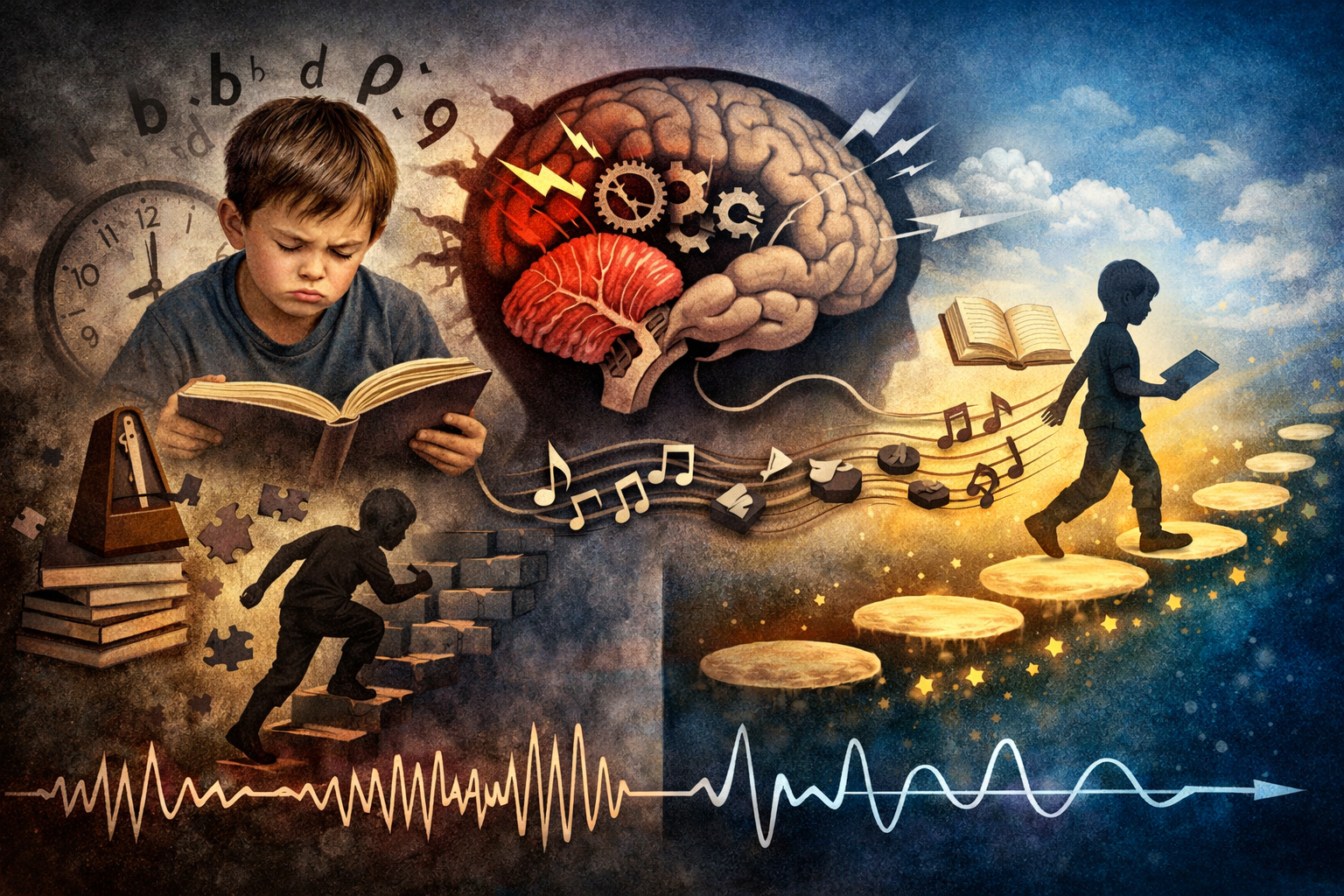
Learning to ride a bike is not primarily a physical skill. It is a brain skill. And the part of the brain most responsible for it is the cerebellum, a dense, cauliflower-shaped structure at the base of the skull that most people have heard of but few fully understand.
The cerebellum does not initiate movement. What it does is far more sophisticated: it coordinates movement. It manages timing, rhythm, sequencing, balance, and the automatic integration of multiple body systems at once. When you ride a bike without thinking about it, steering and balancing and pedaling all happening together and none of it requiring conscious attention, that is the cerebellum doing its job.
The cerebellum is also responsible for something called motor prediction. This is the brain’s ability to anticipate what the body is about to do and prepare for it before it happens. When you lean into a turn on a bike, your cerebellum has already begun adjusting your balance before the lean is complete. That predictive, automatic, self-correcting quality is exactly what makes riding look effortless in someone who has learned it well.
For our children with Down syndrome, the cerebellum is structurally and functionally different.
Research consistently shows that our children have a smaller cerebellar volume relative to overall brain size, and that the functional connectivity between the cerebellum and the rest of the brain is altered. This is not a minor variation. The cerebellum has a disproportionately large impact on movement, coordination, motor learning, and emotional regulation, and our children’s version of it is working harder to accomplish what comes automatically in a neurotypical brain.
This is not a reason for despair. Our children’s brains are plastic and responsive. The cerebellum can and does grow new connections throughout life. But it requires input that is specifically designed for it. General repetition, even a lot of it, is not enough.
The Vestibular Connection Most Programs Miss
There is a specific system within the cerebellum that deserves particular attention when we talk about bike riding: the vestibulo-cerebellar system.
The vestibular system lives in the inner ear and is responsible for our sense of movement, gravity, and spatial orientation. It is what tells you which way is up when your eyes are closed. It is what lets you feel a tilt before you see it. It provides the continuous stream of information that allows the brain to maintain balance during dynamic movement.
The vestibulo-cerebellar system is the direct communication pathway between the inner ear and the cerebellum. When it is working well, balance feels automatic. The brain is constantly receiving accurate information about where the body is in space, and the cerebellum is constantly making micro-corrections to keep it stable.
In trisomy 21, this system is uniquely and specifically affected. Our children’s vestibulo-cerebellar pathway does not process input with the same speed or consistency as their neurotypical peers. This is why our children can appear clumsy on uneven surfaces, why they struggle to catch themselves when they lose their balance, and why they often seem to lean to one side during early bike riding without being able to feel or correct it.
Most bike-riding programs do not target this system, in fact much of motor learning centers around the proprioceptive (Pressure, position) system. This is also a need for our children, but it is only part of the story. With these adaptive programs the focus is on the bike, on the physical practice of scooting and pedaling and steering, and in some cases the proprioceptive input necessary to propel the bicycle. For many children with a typically developing vestibulo-cerebellar pathway, that is enough. The system does its job in the background, learning accumulates, and becomes automatic.
For our children, the system needs to be directly and intentionally engaged before and during bike practice. That engagement is what changes the outcome.
The Nervous System Problem
There is a second obstacle that is just as significant and even less often addressed: the sympathetic nervous system.
The autonomic nervous system has two primary modes. The parasympathetic state is calm, regulated, and open to learning. The sympathetic state is activated when the brain perceives threat, triggering fight, flight, or freeze. Heart rate rises, muscles tense, higher-order thinking narrows, and the capacity to integrate new motor learning drops sharply.
Many of our children have a sympathetic nervous system that tips into activation more easily and takes longer to recover. This is not a behavioral issue. It is a physiological one. When a child with Down syndrome sits on a bike that feels unstable, or is asked to perform a skill that the brain has not yet mapped as safe, the nervous system responds as it is designed to respond: it protects.
A child in sympathetic activation cannot learn a new motor skill the way a regulated child can. The brain is not in the mode for it. No amount of encouragement, cheerfulness, or patient repetition overrides this. The state must change first.
This is why the same child can have what looks like a great session one day and refuse to get on the bike the next. The bike has not changed. The skill has not been forgotten. The nervous system is reading the situation differently on different days, and the body is following its lead.
Until we build regulation into the program itself, at the beginning of every single session before the bike is touched, we are asking our children to learn in a state that makes learning significantly harder than it needs to be.
Why Standard Approaches Fall Short
The most popular approaches to teaching bike riding rely primarily on proprioception. Proprioception is the body’s sense of its own position and force, the feedback that comes from muscles, joints, and connective tissue during movement. It is real, it is powerful, and it contributes meaningfully to motor learning.
But for our children, proprioception is only part of the picture. Without directly targeting the vestibulo-cerebellar pathway, and without addressing nervous system regulation as a prerequisite for each session, many children with Down syndrome can make partial progress but not full, fluid, automatic progress. They can learn to scoot. They can learn to steer. They may even manage some pedaling. But for many of our children, the pieces do not integrate. The brain never gets what it needs to make riding feel natural and self-sustaining.
This is not a failure of the child or the parent. It is a mismatch between the approach and the neurology.
What a Cerebellum-First Approach Looks Like
When we design a bike-riding program around the way our children’s brains are actually wired, several things change.
Regulation comes before riding. Every session begins with breathwork and visualization before the child ever gets on the bike. Slow, intentional breathing activates the parasympathetic nervous system and shifts the brain out of threat mode. Visualization, done consistently over time, begins to build the neural map of what riding feels like from the inside, reducing the novelty and unpredictability that trigger the stress response.
The vestibulo-cerebellar system is directly targeted. Specific integration activities, done before and alongside bike practice, provide the kind of input the vestibulo-cerebellar pathway needs: spinning, rolling, balance challenges, deep proprioceptive loading, and rhythmic, bilateral movement. These are not warm-up activities. They are core work. They are building the neural circuitry that makes automatic balance possible.
The bike is set up to support the nervous system, not challenge it. Pedals come off and the seat is lowered until both feet rest flat on the ground. This gives the body proprioceptive grounding before any balance demand is introduced. The child learns to trust the bike before being asked to balance on it.
The program moves in phases, not weeks. Our children do not learn on a calendar. Some will move through a phase in four days. Others will need a month. The phase structure acknowledges this and removes the pressure that can itself dysregulate the nervous system.
Language is used with intention. “I am a bike rider” is said at the start of every session, before anything happens. This is not a motivational slogan. It is a nervous system signal. Said repeatedly, in a calm and grounded context, it begins to wire the identity of bike rider into the brain before the skill is fully present. The brain moves toward what it already believes to be true.
What Progress Actually Looks Like
Parents often expect progress to look linear. A little better each session, building smoothly toward the finish line.
The reality of cerebellar learning is different. It looks disorganized before it looks coordinated. There will be sessions where your child seems to regress. There will be days when they cannot do what they did yesterday. This is not failure. This is the cerebellum reorganizing information at a deeper level before a new layer of skill can emerge.
The moments to watch for are different than you might expect. Watch for your child getting on the bike with less resistance. Watch for the breathwork becoming something they do without prompting. Watch for the sessions that end with laughter instead of frustration. These are the signs that the nervous system is shifting, that the brain is beginning to call the bike safe.
And then, one day, often quietly and without warning, the pieces integrate. The child glides. Both feet come up. The balance holds. The brain has finished building what it needed to build, and the body follows.
That moment is worth every patient session that came before it.
A Note to Parents Who Have Already Tried
If you have tried other programs and they did not work, I want you to hear this clearly: you did not fail, nor did your child. The programs were not designed for the specific neurology of our children.
The Whole Child Ride Guide was created with this unique framework. One that was built from the ground up around the cerebellum, the vestibular system, and the nervous system that governs whether any of it can “stick.”
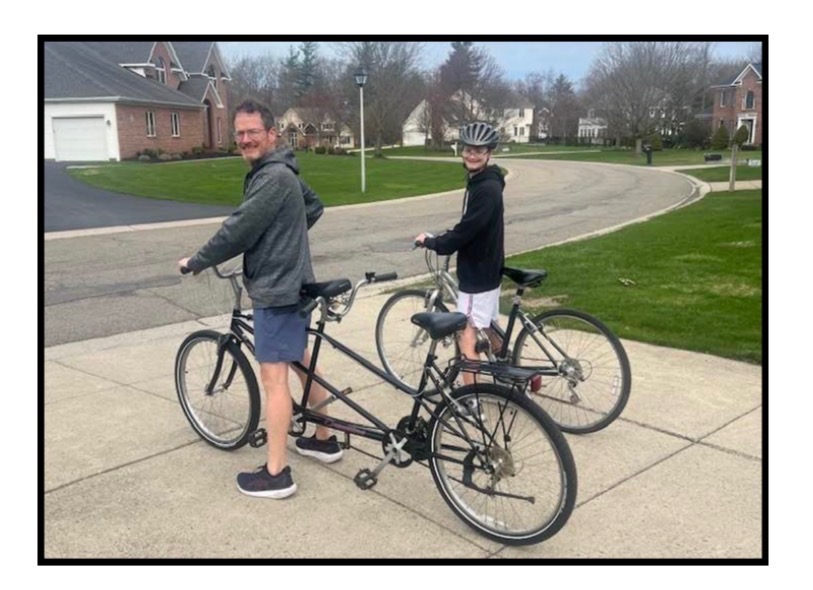
Our children can ride bikes. I have seen it happen, including with my own son. The path there is just not the same path it is for everyone else, and that is okay. It never has to be.