
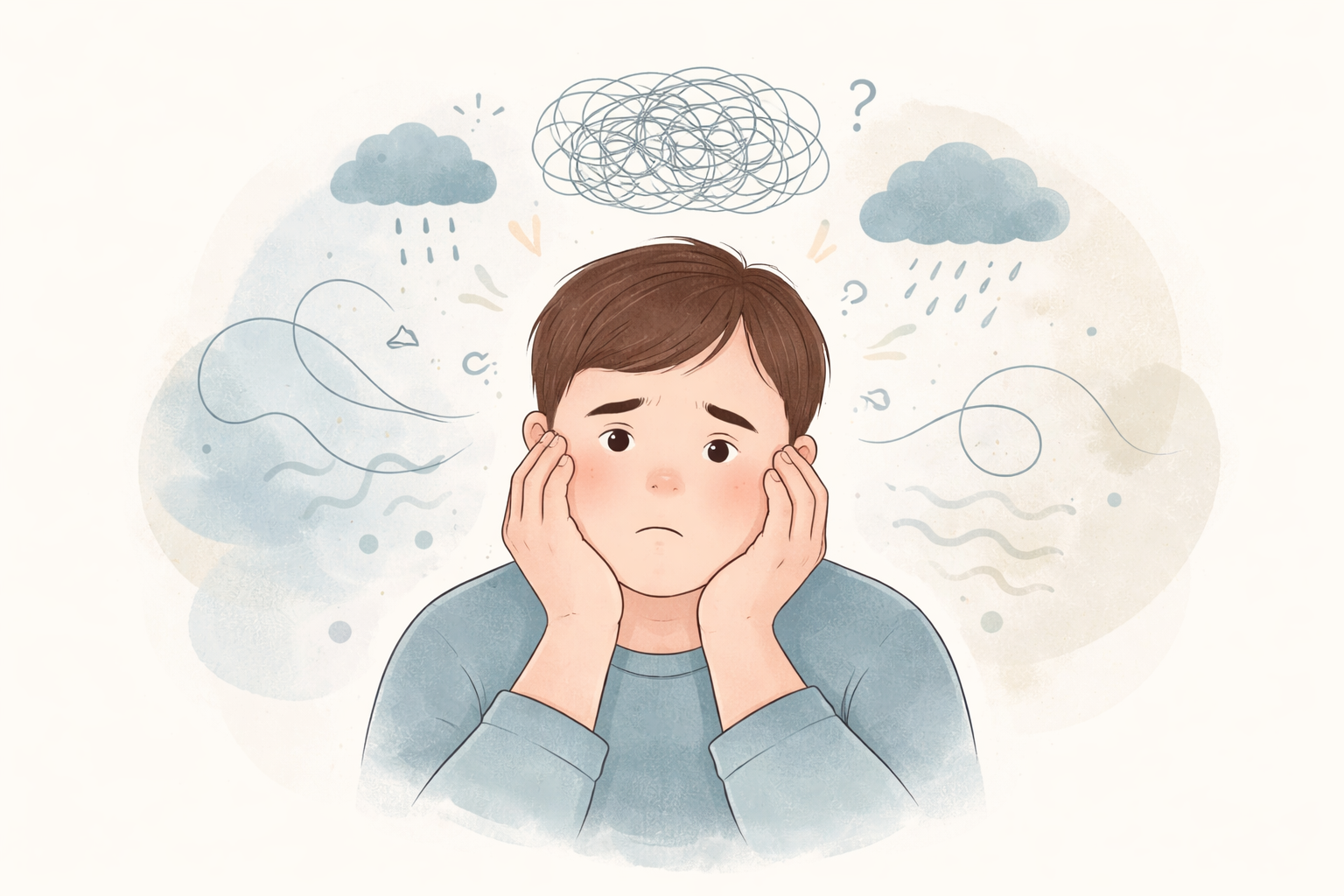

Anxiety-Driven Behavior in Individuals with Down Syndrome
A Neurodevelopmental Framework: Cerebellum, Vestibular System, Proprioception, and Regulation — and What to Do Instead
When looking through a neurodevelopmental lens, behavior is never viewed as a motivation compliance problem.
For individuals with Down syndrome, behavior is the most honest expression of underlying neurobiology.
What is often labeled “challenging behavior” is almost always a regulatory response. It is the nervous system communicating that it does not feel safe, organized, or capable of meeting the current demand.
For individuals with Trisomy 21, this is not surprising. The neuro-structure, biology, and chemistry is different.
The Neurobiology of Down Syndrome Changes the Starting Point
Individuals with Down syndrome experience whole-brain, whole-body neurodevelopmental and integrative differences, that directly affect regulation, anxiety, and behavior.
A few key differences include:
- Cerebellar hypoplasia, affecting timing, prediction, motor planning, automatization, sensory integration, emotional modulation, and so much more.
- Altered vestibular system development, impacting balance, spatial orientation, arousal regulation, and postural control
• Reduced proprioceptive efficiency, leading to poor internal body awareness and decreased grounding
• GABAergic overexpression, biasing the nervous system toward inhibition, shutdown, and fatigue
• Delayed myelination and connectivity, increasing effort for basic tasks and reducing processing speed
Together, these differences (along with many others) mean that individuals with Down syndrome often live close to the edge of overload even when things appear “fine” externally.
Anxiety, in this context, is not psychologically unpredictable, It is a neurophysiological state.
Anxiety in Down Syndrome: A Cerebellar-Regulatory State
It is incredibly important to distinguish between observable “behaviors” we label as anxiety sort of as a catch all.
Clinical anxiety is a psychiatric diagnosis that is a “top-down” disorder of threat perception. It primarily involves the amygdala, limbic system, and prefrontal cortex. The individual commonly experiences excessive fear or worry about some anticipated event, it is persistent across settings, and it is characterized by hyper vigilance and avoidance. Traditional treatment methods include Cognitive Behavioral Therapy, medication, and Insight-based therapy.
In individuals with DS, the cerebellum plays a large role in observed behaviors that are labeled “anxiety.” The difference is that for our children, this is a result of bottom up processing with a large role played by the cerebellum.
The cerebellum plays a central role in:
- prediction (What comes next?)
- feedforward control
- timing and rhythm
- error correction
- emotional modulation and regulation
- procedural learning
In individuals with Down syndrome, we observe anxiety-like behaviors, but the cerebellar inefficiency means the brain struggles to predict and stabilize experience. When prediction is unreliable, uncertainty rises. When uncertainty rises, the nervous system defaults to protection.
This is why anxiety-driven behavior in Down syndrome is often:
- rapid and seemingly disproportionate
- rigid rather than flexible (giving rise to the label “Stubborn”)
- resistant to verbal reasoning (This one is hard for me – the more talking, the more anxiety because processing slows way down)
- worsened by pressure, speed, or unpredictability
The nervous system is not choosing behavior, it is protecting itself. It is seeking physiological safety.
Why Vestibular and Proprioceptive Systems Matter So Much in Down Syndrome
Vestibular Differences
The vestibular system is foundational for:
- arousal regulation
- spatial safety
- emotional stability
- eye-head-body coordination
- tolerance for transitions and movement
In Down syndrome, vestibular inefficiency means the individual may feel internally unstable, even while sitting still. This instability amplifies anxiety, particularly during transitions, crowds, noise, or visual complexity.
Proprioceptive Differences
Proprioception anchors the nervous system. It tells the brain:
- where the body is
- how much force to use
- what feels grounded and safe
In Down syndrome, reduced proprioceptive feedback means the nervous system lacks a reliable internal “map.” Without grounding, anxiety escalates quickly.
This is why proprioceptive input is literally regulatory medicine.
Predictability is Neurological Support
For individuals with Down syndrome, predictability supports:
- cerebellar prediction
- vestibular orientation
- autonomic stability (vagus nerve and other interoception considerations here)
Unpredictable environments dramatically increase neurological load. When expectations change suddenly, transitions pile up, sensory input is overwhelming, and/or instructions are layered verbally, the system destabilizes.
What to Do Instead
- When You See Avoidance or Refusal
What’s happening neurologically:
Initiation requires cerebellar sequencing, vestibular stability, and proprioceptive grounding. All areas of vulnerability in Down syndrome.
What to do instead:
• Provide proprioceptive input before the task
• Wall pushes, chair push-downs, carrying weight, resistance bands
• Initiate together
• Reduce verbal load
• Show instead of explain
• Change body position
• Prone, standing, or movement-based work instead of sitting
• Name safety
• “Your body needs help getting ready and we’ll do that first, together.”
- When You See Fight, Flight, or Freeze
What’s happening neurologically:
Autonomic takeover. Cerebellar modulation offline. Vestibular insecurity high.
What to do instead:
- lower sensory input immediately
- shift to rhythm, predictable movement patterns, breathwork
- walking, rocking, counting, slow metronome work (60-70 bpm)
- gentle but firm pressure, proprioceptive / heavy work / activity
- coregulation between adult and student
- do no increase demands
- When You See Emotional Outbursts
What’s happening neurologically:
Cerebellar overload + autonomic release.
What to do instead:
- stop teaching
- provide calming and regulating input per individualized plan
- decide when to continue when both adult and student are reulated
- When You See Shutdown or Withdrawal
What’s happening neurologically:
Vagus dysregulation. Energy preservation. Sympathetic “Freeze” response
What to do instead:
- remove pressure for speech / communication
- provide grounding activities (proprioceptive work / input)
- slow predictable movement
- reduce expectations dramatically
- respect withdrawl as protection
- When You See Perfectionism
What’s happening neurologically:
Cortical control compensating for poor cerebellar prediction.
What to do instead:
- limit repetitions (when error correction and control by the cerebellum is affected, practice does not make perfect)
- model
- do not test or ask for any other performance based output from the student
- ground the body before cognitive work
- When You See Masking
Masking is the conscious or unconscious effort an individual uses to suppress natural regulatory needs and neurological signals in order to meet external expectations.
For individuals with Down syndrome, masking often involves overriding sensory, motor, emotional, or communication needs so they appear more compliant, calm, or “typical” in structured environments such as school.
Masking is not a skill, not resilience, and not evidence of regulation. It is a compensatory survival strategy that relies on excessive top-down control to manage bottom-up sensory and nervous system demands.
Masking is how our children appear to “comply” with a behavior plan.
What Masking Can Look Like in Individuals with Down Syndrome
Masking may include:
- forcing eye contact despite discomfort
- suppressing movement or fidgeting
- remaining quiet when overwhelmed
- copying peers without understanding
- complying while internally dysregulated
- delaying emotional responses until later
- appearing “fine” at school but collapsing at home
Because individuals with Down syndrome often have reduced processing efficiency and higher regulatory load, masking requires disproportionately high energy.
Why Masking Is Neurologically Costly in Down Syndrome
Masking places heavy demands on systems already vulnerable in Trisomy 21, including:
- the cerebellum, responsible for modulation and prediction
- the vestibular system, responsible for orientation and arousal
- proprioceptive systems, responsible for grounding and body awareness
To mask successfully, the individual must maintain constant cognitive control to override sensory and emotional signals. This effort:
• increases anxiety
• accelerates fatigue
• reduces learning capacity
• delays skill automatization
• leads to eventual shutdown, withdrawal, or emotional release
Masking does not reduce dysregulation, it postpones it.
Why Masking Is Often Misinterpreted
Masking is frequently mistaken for:
• “good behavior”
• improved self-control
• successful inclusion
• emotional maturity
In reality, masking often hides distress until the nervous system can no longer sustain control.
What’s happening neurologically:
Top-down control exhausting an already inefficient system.
What to do instead:
• Schedule regulation before collapse
• Normalize movement and sensory tools
• Reduce social performance demands
• Track energy, not compliance
- When Physical Complaints Appear
What’s happening neurologically:
Autonomic stress + vestibular/proprioceptive fatigue.
What to do instead:
• Believe the body
• Reduce sensory and postural load
• Increase grounding
• Never frame as avoidance
- When Transitions Are Hard
What’s happening neurologically:
Vestibular reorientation + cerebellar prediction failure.
What to do instead:
• Preview early
• Use visual timers
• Pair transitions with movement
• Lower expectations immediately after
- When Behavior Is Labeled “Defiant,” “Lazy,” or “Manipulative”
Understand the physiological and neurological components:
• Defiance = overload + fear
• Laziness = energy depletion
• Manipulation = lack of accessible regulation strategies
What to do instead:
• Build the nervous system first
• Reduce load before raising expectations
• Support regulation as a prerequisite to learning
You cannot train, reward, or consequence cerebellar inefficiency out of existence.
You can:
• strengthen cerebellar function through patterned movement
• stabilize vestibular input through graded motion
• anchor proprioception through intentional sensory loading
• support regulation through predictability, rhythm, and relationship
For individuals with Down syndrome:
Regulation is the intervention.
Behavior is the signal.
Learning always follows safety.
How to Discuss This With Your School Team
Advocating From Neurobiology, Not Emotion
When discussing anxiety-driven behavior and regulation with your school team, the goal is to shift the frame from behavior management to nervous system support.
Start from shared values:
“We all want my child to feel safe, regulated, and able to learn.”
From there, introduce the neurodevelopmental lens.
- Lead With the Reframe, Not the Behavior
Instead of listing behaviors, begin with the underlying need:
“What we’re seeing isn’t a motivation or compliance issue. It’s a regulation issue related to how my child’s nervous system processes sensory input and manages transitions.”
This immediately moves the conversation away from discipline and toward support.
- Use Simple, Grounded Neurobiology Language
You do not need to give a neuroscience lecture. Use clear, accessible language:
“Individuals with Down syndrome often have differences in cerebellar, vestibular, and proprioceptive processing. These systems affect regulation, prediction, and emotional control. When they’re overloaded, observable behavior changes as the system attempts to regulate.”
This frames behavior as neurological, not personal.
- Emphasize Regulation as a Prerequisite to Learning
A powerful anchor statement:
“My child can’t demonstrate skills when their nervous system isn’t regulated. Regulation has to come before expectations.”
This aligns with educational goals while explaining why traditional approaches may fail.
Reframe “Behavior Plans” as “Regulation Supports”
If behavior plans or consequences are discussed, redirect gently:
“Instead of focusing on stopping behaviors, we’re hoping to focus on what helps my child stay regulated—predictability, movement, proprioceptive input, and reduced sensory load.”
This keeps the conversation collaborative rather than confrontational.
Translate ‘What to Do Instead’ Into School Language
Offer concrete, school-friendly supports. A few examples are:
- proactive and prescriptive movement breaks
- predictable routines and transition previews
- access to proprioceptive input (wall pushes, heavy work, resistance)
- reduced verbal demands during dysregulation
- flexible positioning for work
These supports help stabilize the nervous system so learning can happen.
Normalize the Need for Support — Not Lower Expectations
You are asking for the right supports so your child can meet expectations and therefore it is critical to have productive and collaborative conversations. Often, there are many needs to which the teacher must respond in a classroom. Often, the 1:1 interventions happen between the paraprofessionals and the student. This dynamic is extremely important. If the proper mindset, training, and approaches can be communicated with the personal aide or classroom aide, as well as the rest of the team who has the ability to see your child 1:1, then proactive and individualized approaches for regulation become possible.
Acknowledge the Team’s Expertise While Holding the Line
A respectful but firm approach:
“We really value the team’s experience. At the same time, we know our child’s neurobiology well, and regulation-based support is essential for them to succeed.”
You can be collaborative without surrendering clarity by bringing the conversation back to regulation for outcomes. Emphasize shared goals.
“When my child is regulated, we see better engagement, fewer disruptions, and more learning. Supporting regulation helps everyone in the classroom.”
This reinforces that regulation is not a “special request” that adds more work to an already overwhelmed system, instead it’s a functional solution.
If the conversation becomes stuck or reverts back to reinforcements or other behavioral components, returning to the concept that observable behavior in our children begins in regulation is critical.
Behavior is the signal, not the problem. When we support the nervous system, the behavior improves. If we do not provide supports for a student to turn off flight / fight / freeze, rescue overwhelm, and provide physiological safety, the student has no access to the thinking part of their brain…they literally can not comply with what is being asked.